

Myoko Japan: Deep Powder, Old Ski Towns, Real Backcountry
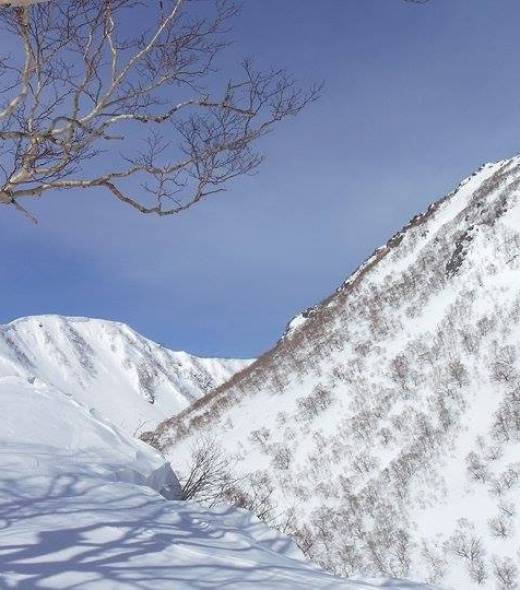
Myoko Japan sits about an hour out of Nagano City, just over the border in Niigata — and if you’re after proper JAPOW without the queues, this is where the old-timers have been quietly skiing since the 1930s. Mt Myoko stands at 2,454m and doesn’t mess about when it comes to snowfall — this is one of the snowiest corners of an already snowy country.
The Myoko Ski Area isn’t one resort, it’s ten — Akakura Onsen, Akakura Kanko, Ikenotaira Onsen, Myoko Suginohara (home to Japan’s longest ski run), Madarao Kogen, Tangram Ski Circus, Seki Onsen and a few smaller fields, all strung along the same range. Get a local guide who knows which lift to hit on any given day and you’ll ski terrain most visitors never find.
We’ve been guiding this range for years. It’s rural Japan at its best — proper onsen towns, izakayas that haven’t changed in decades, and deep, dry snow that keeps falling long after the big-name resorts have gone icy. If that sounds like your kind of trip, you’re in the right place.
Soak, Relax, and Warm Up After a Big Day
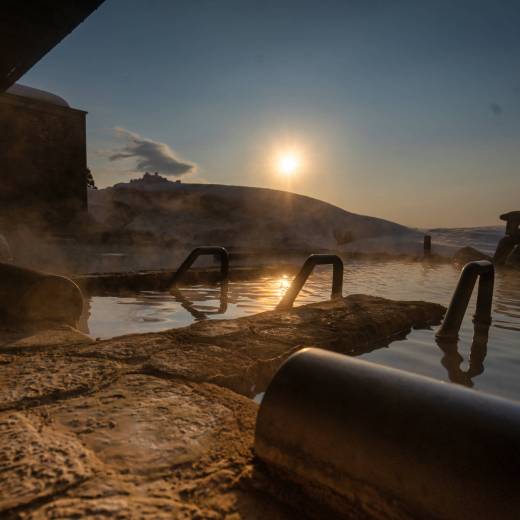
Myoko’s got seven onsen areas worth knowing about, each with its own mineral mix and water temperature. Different water, same result: it’s the best way we know to sort out tired legs after a proper day in the mountains — grab a beer after and you’ve got the whole routine sorted.
From Narita Airport
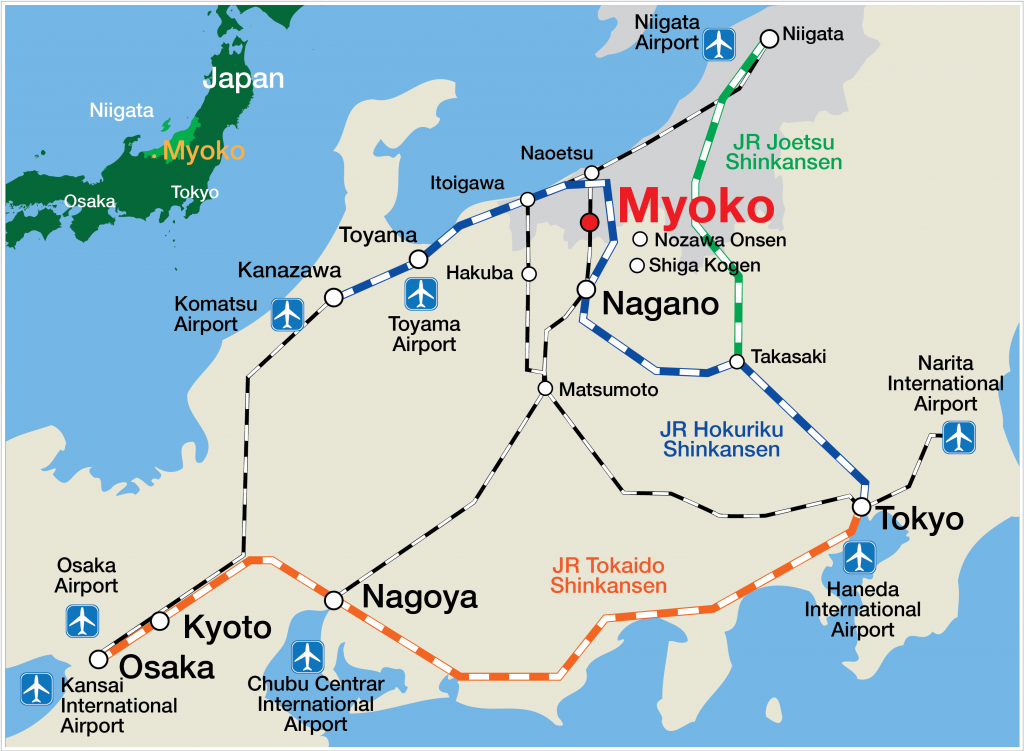
Once you’re through passport control and customs, head downstairs to the basement-level JR stations — they’re in both terminals. The most convenient train is the Narita Express (N’EX), which leaves roughly every half hour for a 53-minute trip to Tokyo Station. Tickets for the entire trip up to Nagano Station can be purchased here; JR East Passes and Japan Rail Passes can also be exchanged at the JR East Travel Service Centers (see below).
- JR East Travel Service Centers at Narita Airport
- JR East Travel Service Centers can be found at both Terminal 1 and Terminal 2 at Narita Airport. The Centers are open every day from 11:30 am to 7 pm, and handle the sale and exchange of the JR East Pass (available only to visitors from overseas on short-term visas of no longer than 90 days) as well as the Japan Rail Pass (covering all six JR regional companies, and which can only be pre-purchased overseas). Other services include ticket sales and sightseeing information.If the JR East Travel Service Center is closed, go to the JR ticket office. Hours of operation:
Terminal 1: 6:30 to 11:30 am, 7:00 to 9:45 pm
Terminal 2: 6:30 to 11:30 am, 7:00 to 9:50 pm
JR East Info Line- Telephone English information hotline for questions about JR service
Tel: (050) 2016-1603
Hours of operation- 10 am to 6 pm; closed during the New Year holidays
From Tokyo Station
At Tokyo Station, head upstairs for the Hokuriku Shinkansen (the station is always busy, but all lines are well marked—just follow the signs).
Hokuriku Shinkansen trains depart from platforms 20 through 23; all trains stop at Nagano Station, so you have many choices.
When you arrive in Nagano:
The transfer from the Hokuriku Shinkansen to the local Shinano Tetsudo is a simple one these days — just roll through the gate and onto the local platform, with elevators to help get your gear down. Once you’re in Myoko Kogen, free shuttle buses run between the local stations and most of the ten resorts through the ski season — timetables shift through the season, so check with your accommodation or ask us before you land. We can also sort transfers as part of your trip if you’d rather not juggle timetables.
A few things people always ask us about Myoko
Where is Myoko, Japan?
Myoko Kogen is in Niigata Prefecture, about an hour by train and shuttle from Nagano City — roughly 3.5 hours door-to-door from Narita via the Shinkansen. It’s one of the older ski areas in the country, running since the 1930s.
How many resorts make up the Myoko ski area?
Ten, all linked along the same range — Akakura Onsen, Akakura Kanko, Ikenotaira Onsen, Myoko Suginohara, Madarao Kogen, Tangram Ski Circus, Seki Onsen and a few smaller fields. Most people base themselves in one town and lift-and-shuttle their way around the rest.
What’s the best time to ski Myoko?
January and February for the deepest, driest snow; March still delivers if you’re after spring corn and quieter slopes. Myoko picks up serious dumps thanks to its position catching Siberian storms straight off the Sea of Japan.
Do I need a car in Myoko?
No — we don’t bother with one, and you shouldn’t either. Between the trains, the shuttle buses, and guides who know the roads, you’re better off leaving the driving to us and spending the energy on skiing.
Fancy a proper look at what Myoko’s got, backcountry included? Check out our Myoko Private Tours — we’ll show you the good stuff, and there’s usually a beer in it at the end of the day.